


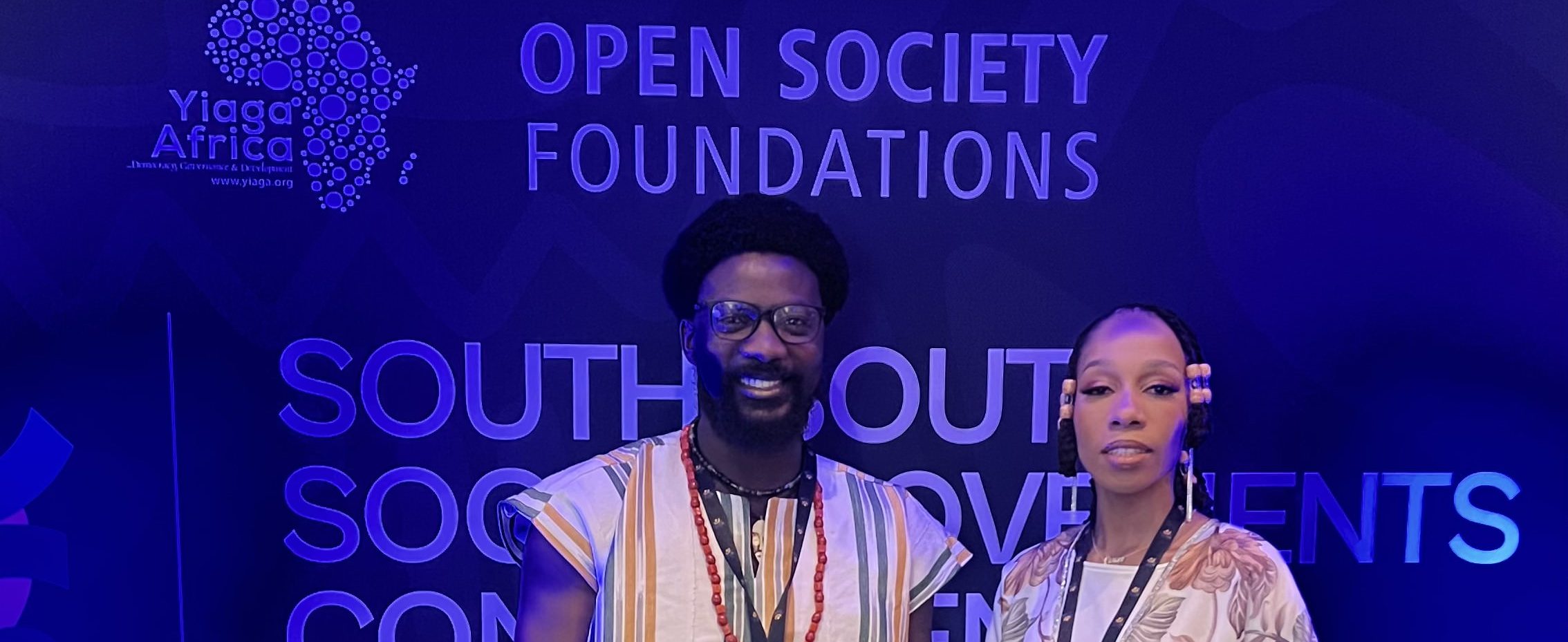
Mantate Queeneth Mlotshwa, a master’s student in Global African Studies at The Africa Institute, Global Studies University, specializing in Diplomacy and Africa’s International Relations, participated in the South–South Social Movements Convergence in Cape Town, South Africa, from October 30 to November 1, 2025. Convened by YIAGA Africa in collaboration with the Open Society Foundations, the gathering brought together movement builders from Africa, Latin America, Asia, the Middle East, and North Africa to discuss youth participation, democracy, and good governance.
The convergence emphasized dialogue, collaboration, and shared strategy, culminating in the drafting of a South–South Solidarity Pact. Mlotshwa had the honor of moderating the opening panel session, featuring Valeria Angola from Mexico, Emilie Palamy from Thailand, and Shakira Wafula from Kenya. The conversation focused on wellness in movement building, exploring how organizers sustain themselves while working under political, social, and emotional pressure.
Panelists discussed creative and artistic practices as forms of care, as well as decolonial and feminist approaches to organizing and creating safer spaces for vulnerable communities. Reflecting on the session, Mlotshwa highlighted the importance of collective effort in sustaining movement work. “Sitting in that panel, with phenomenal women and hearing their stories reminded me of the power of what we do as individuals in our different spaces,” she said. “The value of the work we do, despite the difficulties.”
The experience closely connected with Mlotshwa’s coursework in Social and Political Thought with Dr. Mamadou Diouf, Visiting Professor of African History at The Africa Institute. She drew links between classroom discussions of Black movements, diaspora, and global power structures and the conversations in Cape Town. “It was powerful to see how my classroom learnings about the African diaspora came alive in real conversations about solidarity, art, and identity,” she reflected.
Other sessions examined how shifting global political and economic conditions affect social movements, including questions of resourcing, policy, and power. Participants explored strategies for decolonizing mobilization, recentring marginalized voices, and rethinking hierarchical structures within movements. Discussions also addressed leadership, technology, and creative expression.
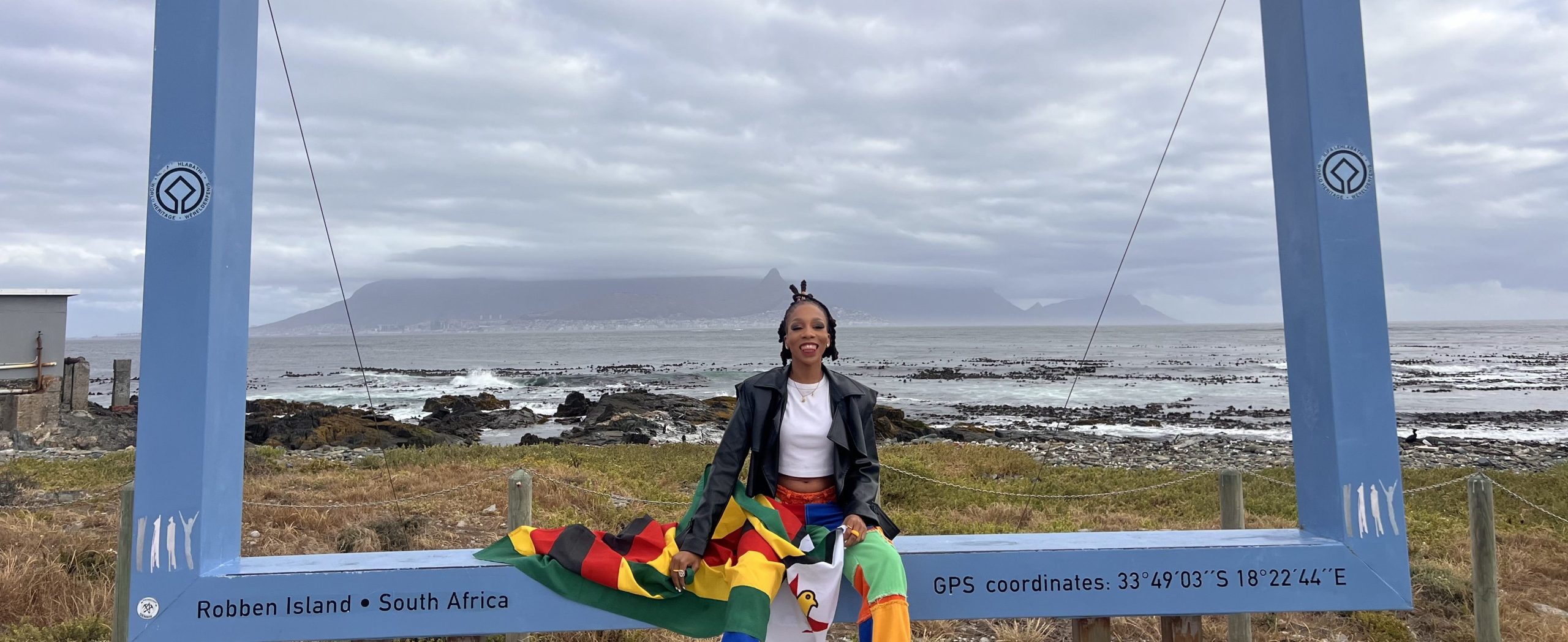
A visit to Robben Island provided historical context to the gathering. Guided by a former political prisoner, participants reflected on memory, healing, and the continuity between past struggles and contemporary activism. The visit underscored how historical experiences continue to shape present efforts to imagine more just futures.
Throughout the convergence, Mlotshwa shared her academic work and experiences as a student specializing in Diplomacy and Africa’s International Relations. She spoke with fellow participants about the interdisciplinary approach of the Global African Studies program and its emphasis on Africa’s global connections. She left Cape Town, she wrote, “inspired, grounded, and ready to keep building.”
Mantate Queeneth Mlotshwa is a master’s student in Global African Studies specializing in Diplomacy and Africa’s International Relations. Her research focuses on Africa’s governance, global leadership, and the role of digital media in international relations, with particular attention to women’s leadership and global governance.
Mantate Queeneth Mlotshwa, a master’s student in Global African Studies at The Africa Institute, Global Studies University, specializing in Diplomacy and Africa’s International Relations, participated in the South–South Social Movements Convergence in Cape Town, South Africa, from October 30 to November 1, 2025. Convened by YIAGA Africa in collaboration with the Open Society Foundations, the gathering brought together movement builders from Africa, Latin America, Asia, the Middle East, and North Africa to discuss youth participation, democracy, and good governance.
Mantate Queeneth Mlotshwa, a master’s student in Global African Studies at The Africa Institute, Global Studies University, specializing in Diplomacy and Africa’s International Relations, participated in the South–South Social Movements Convergence in Cape Town, South Africa, from October 30 to November 1, 2025. Convened by YIAGA Africa in collaboration with the Open Society Foundations, the gathering brought together movement builders from Africa, Latin America, Asia, the Middle East, and North Africa to discuss youth participation, democracy, and good governance.
The convergence emphasized dialogue, collaboration, and shared strategy, culminating in the drafting of a South–South Solidarity Pact. Mlotshwa had the honor of moderating the opening panel session, featuring Valeria Angola from Mexico, Emilie Palamy from Thailand, and Shakira Wafula from Kenya. The conversation focused on wellness in movement building, exploring how organizers sustain themselves while working under political, social, and emotional pressure.
Panelists discussed creative and artistic practices as forms of care, as well as decolonial and feminist approaches to organizing and creating safer spaces for vulnerable communities. Reflecting on the session, Mlotshwa highlighted the importance of collective effort in sustaining movement work. “Sitting in that panel, with phenomenal women and hearing their stories reminded me of the power of what we do as individuals in our different spaces,” she said. “The value of the work we do, despite the difficulties.”
The experience closely connected with Mlotshwa’s coursework in Social and Political Thought with Dr. Mamadou Diouf, Visiting Professor of African History at The Africa Institute. She drew links between classroom discussions of Black movements, diaspora, and global power structures and the conversations in Cape Town. “It was powerful to see how my classroom learnings about the African diaspora came alive in real conversations about solidarity, art, and identity,” she reflected.
Other sessions examined how shifting global political and economic conditions affect social movements, including questions of resourcing, policy, and power. Participants explored strategies for decolonizing mobilization, recentring marginalized voices, and rethinking hierarchical structures within movements. Discussions also addressed leadership, technology, and creative expression.
A visit to Robben Island provided historical context to the gathering. Guided by a former political prisoner, participants reflected on memory, healing, and the continuity between past struggles and contemporary activism. The visit underscored how historical experiences continue to shape present efforts to imagine more just futures.
Throughout the convergence, Mlotshwa shared her academic work and experiences as a student specializing in Diplomacy and Africa’s International Relations. She spoke with fellow participants about the interdisciplinary approach of the Global African Studies program and its emphasis on Africa’s global connections. She left Cape Town, she wrote, “inspired, grounded, and ready to keep building.”
Mantate Queeneth Mlotshwa is a master’s student in Global African Studies specializing in Diplomacy and Africa’s International Relations. Her research focuses on Africa’s governance, global leadership, and the role of digital media in international relations, with particular attention to women’s leadership and global governance.
Subscribe to our mailing list and get the latest news from The Africa Institute


