

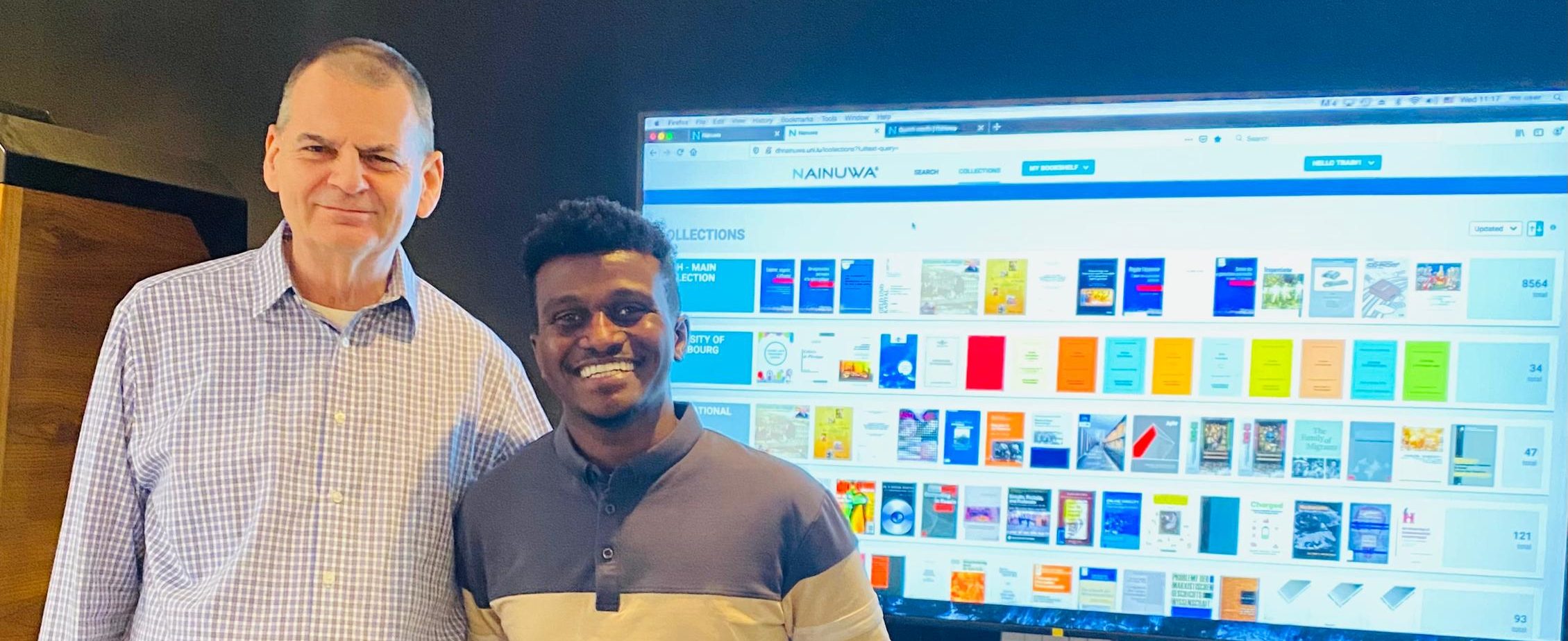
Ezzeldin Hajjaj, a Master of Arts student in Global African Studies at The Africa Institute, Global Studies University, joined a two-month Scholars at Risk Fellowship, which began in December 2025, at the Luxembourg Centre for Contemporary and Digital History (C²DH), University of Luxembourg.
Hajjaj is pursuing his MA with a specialization in Museum and Critical Heritage Studies and brings experience in archaeology and museum work to his graduate studies. Originally from Sudan, he joined the program to deepen his engagement with heritage governance, memory, and decolonial practices, particularly within African cultural institutions.
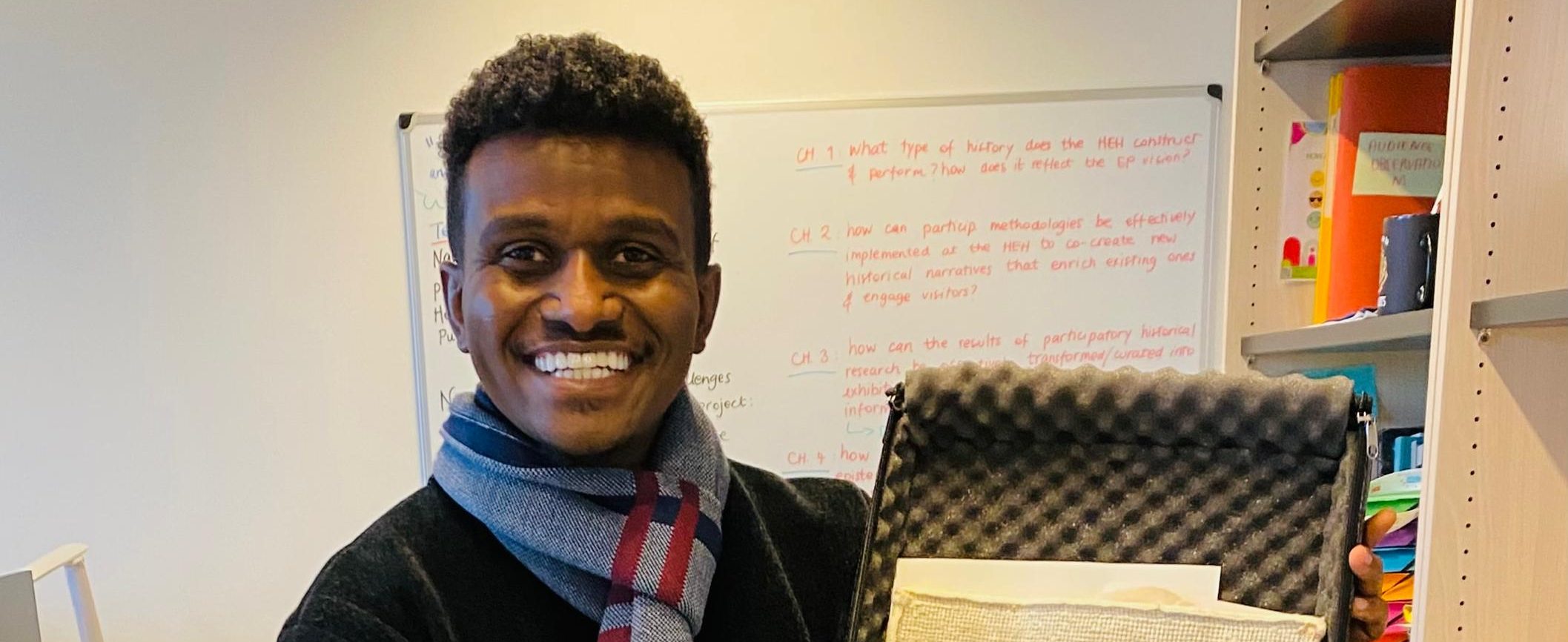
During his fellowship, Hajjaj engaged with scholars on ways to rethink museum practices and historical interpretation. “During my fellowship at C²DH, I contributed to academic discussions on decolonial museum practices and innovative approaches to historical engagement in museums and other cultural institutions,” Hajjaj said.
The Luxembourg Centre for Contemporary and Digital History is an interdisciplinary research centre that promotes high-quality scholarship in contemporary, public, and digital history. Fellows are encouraged to pursue independent research, collaborate with faculty and peers, and present their projects in seminars or colloquia.
Hajjaj’s fellowship complemented his graduate research, which examines museums as sites of historical interpretation, negotiation, and power, including debates surrounding restitution and heritage governance in Africa.
Ezzeldin Hajjaj, a Master of Arts student in Global African Studies at The Africa Institute, Global Studies University, joined a two-month Scholars at Risk Fellowship, which began in December 2025, at the Luxembourg Centre for Contemporary and Digital History (C²DH), University of Luxembourg.
Ezzeldin Hajjaj, a Master of Arts student in Global African Studies at The Africa Institute, Global Studies University, joined a two-month Scholars at Risk Fellowship, which began in December 2025, at the Luxembourg Centre for Contemporary and Digital History (C²DH), University of Luxembourg.
Hajjaj is pursuing his MA with a specialization in Museum and Critical Heritage Studies and brings experience in archaeology and museum work to his graduate studies. Originally from Sudan, he joined the program to deepen his engagement with heritage governance, memory, and decolonial practices, particularly within African cultural institutions.
During his fellowship, Hajjaj engaged with scholars on ways to rethink museum practices and historical interpretation. “During my fellowship at C²DH, I contributed to academic discussions on decolonial museum practices and innovative approaches to historical engagement in museums and other cultural institutions,” Hajjaj said.
The Luxembourg Centre for Contemporary and Digital History is an interdisciplinary research centre that promotes high-quality scholarship in contemporary, public, and digital history. Fellows are encouraged to pursue independent research, collaborate with faculty and peers, and present their projects in seminars or colloquia.
Hajjaj’s fellowship complemented his graduate research, which examines museums as sites of historical interpretation, negotiation, and power, including debates surrounding restitution and heritage governance in Africa.
Subscribe to our mailing list and get the latest news from The Africa Institute


