


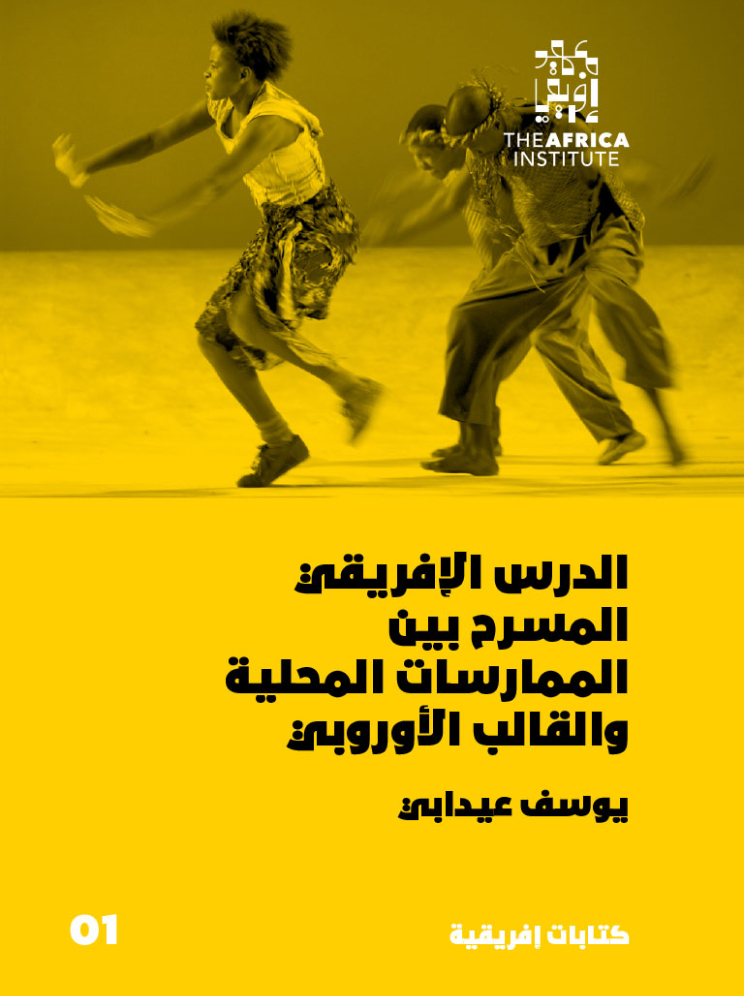
The point of departure in this brief but succinct study is the author’s conviction that “theatre is not a European particularity” and that it is a universal “reflection and expression of societal needs.” The book addresses this complex issue, beginning with the contributions of the pioneers of the Negritude movement, including the writings and works of the Martinican poet Aimé Césaire and the Senegalese poet and former president Léopold Sédar Senghor, and their experiments in African theatre. The author also offers a brief survey of theatre experimentation in the Arab world, including what became known as “Third World” theatre in the 1960s and 70s, as part of an effort to build a modernized national theatre in form and content amid the postcolonial challenges previously discussed.
This book reflects the work of Dr. Yousif Aydabi as a playwright, literary critic, and poet. These ideas were central to his pioneering project in Sudan prior to his emigration to the Gulf and beyond. His vision was to build a “Sudanese” theatre, articulated in his well-known manifesto Towards a Theatre for All Sudanese People, which embraces the plurality of Sudan’s ethnicities and cultures.
Dr. Yousif Aydabi, a Sudanese specialist in comparative theatre and film studies, has held professional positions in cultural planning, education, journalism, and publishing. A critic and editor, he has also published several books on poetry, cinema, and art.
The point of departure in this brief but succinct study is the author’s conviction that “theatre is not a European particularity” and that it is a universal “reflection and expression of societal needs.” The book addresses this complex issue, beginning with the contributions of the pioneers of the Negritude movement, including the writings and works of the Martinican poet Aimé Césaire and the Senegalese poet and former president Léopold Sédar Senghor, and their experiments in African theatre. The author also offers a brief survey of theatre experimentation in the Arab world, including what became known as “Third World” theatre in the 1960s and 70s, as part of an effort to build a modernized national theatre in form and content amid the postcolonial challenges previously discussed.
The point of departure in this brief but succinct study is the author’s conviction that “theatre is not a European particularity” and that it is a universal “reflection and expression of societal needs.” The book addresses this complex issue, beginning with the contributions of the pioneers of the Negritude movement, including the writings and works of the Martinican poet Aimé Césaire and the Senegalese poet and former president Léopold Sédar Senghor, and their experiments in African theatre. The author also offers a brief survey of theatre experimentation in the Arab world, including what became known as “Third World” theatre in the 1960s and 70s, as part of an effort to build a modernized national theatre in form and content amid the postcolonial challenges previously discussed.
This book reflects the work of Dr. Yousif Aydabi as a playwright, literary critic, and poet. These ideas were central to his pioneering project in Sudan prior to his emigration to the Gulf and beyond. His vision was to build a “Sudanese” theatre, articulated in his well-known manifesto Towards a Theatre for All Sudanese People, which embraces the plurality of Sudan’s ethnicities and cultures.
Dr. Yousif Aydabi, a Sudanese specialist in comparative theatre and film studies, has held professional positions in cultural planning, education, journalism, and publishing. A critic and editor, he has also published several books on poetry, cinema, and art.
The Africa Institute (Sharjah, UAE) and Madarat (Khartoum, Sudan)
Arabic
978-9948-25-212-2
18 x 13 cm, paperback
AED 16 | $4
2020
Subscribe to our mailing list and get the latest news from The Africa Institute


