

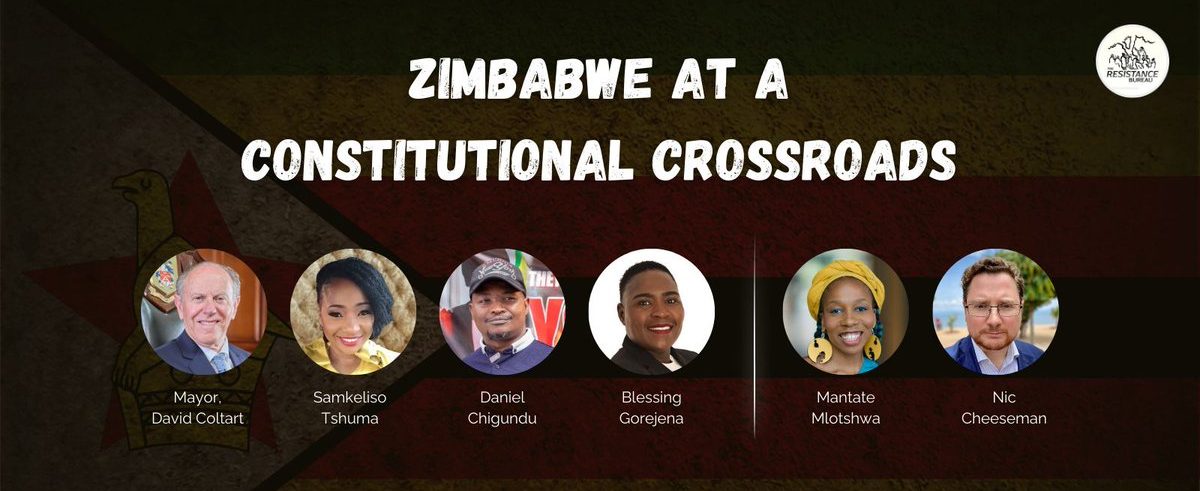
Mantate Queeneth Mlotshwa, a Master of Arts student in Global African Studies at The Africa Institute, Global Studies University, specializing in Diplomacy and Africa’s International Relations, co-hosted a virtual discussion on Zimbabwe’s Constitutional Amendment (No. 3) Bill on February 25, 2026.
The discussion explored what the proposed changes to specific sections of Zimbabwe’s constitution mean for citizens, the ways individuals and organizations can engage with the process, and the broader implications for the country’s democratic trajectory. Guests included the mayor of Mlotshwa’s home city, members of the media, representatives from human rights and civic organizations, and academics.
“As a young Zimbabwean in the diaspora, whose research focuses on questions of agency, this platform allows me to contribute to making the bill accessible to Zimbabweans both at home and abroad,” said Mlotshwa reflecting on the conversation.
Mlotshwa’s research examines Africa’s governance, global leadership, and the role of media, particularly digital media, in shaping international relations. She is especially interested in women’s leadership, global governance, and the intersections of diplomacy, media, and representation, exploring Africa’s connections with the Middle East, the diaspora, and the wider world. Through her studies, she aims to produce research that is academically rigorous and practically impactful, contributing to scholarship and policy in African international relations.
Mantate Queeneth Mlotshwa, a Master of Arts student in Global African Studies at The Africa Institute, Global Studies University, specializing in Diplomacy and Africa’s International Relations, co-hosted a virtual discussion on Zimbabwe’s Constitutional Amendment (No. 3) Bill on February 25, 2026.
Mantate Queeneth Mlotshwa, a Master of Arts student in Global African Studies at The Africa Institute, Global Studies University, specializing in Diplomacy and Africa’s International Relations, co-hosted a virtual discussion on Zimbabwe’s Constitutional Amendment (No. 3) Bill on February 25, 2026.
The discussion explored what the proposed changes to specific sections of Zimbabwe’s constitution mean for citizens, the ways individuals and organizations can engage with the process, and the broader implications for the country’s democratic trajectory. Guests included the mayor of Mlotshwa’s home city, members of the media, representatives from human rights and civic organizations, and academics.
“As a young Zimbabwean in the diaspora, whose research focuses on questions of agency, this platform allows me to contribute to making the bill accessible to Zimbabweans both at home and abroad,” said Mlotshwa reflecting on the conversation.
Mlotshwa’s research examines Africa’s governance, global leadership, and the role of media, particularly digital media, in shaping international relations. She is especially interested in women’s leadership, global governance, and the intersections of diplomacy, media, and representation, exploring Africa’s connections with the Middle East, the diaspora, and the wider world. Through her studies, she aims to produce research that is academically rigorous and practically impactful, contributing to scholarship and policy in African international relations.
Subscribe to our mailing list and get the latest news from The Africa Institute


