

The Africa Institute, Global Studies University, hosted a seminar in the campus auditorium on February 10, 2026, exploring how African languages and literatures serve as sites of knowledge, memory, and world-making. The session featured two visiting scholars from the University of Vienna’s Department of African Studies.
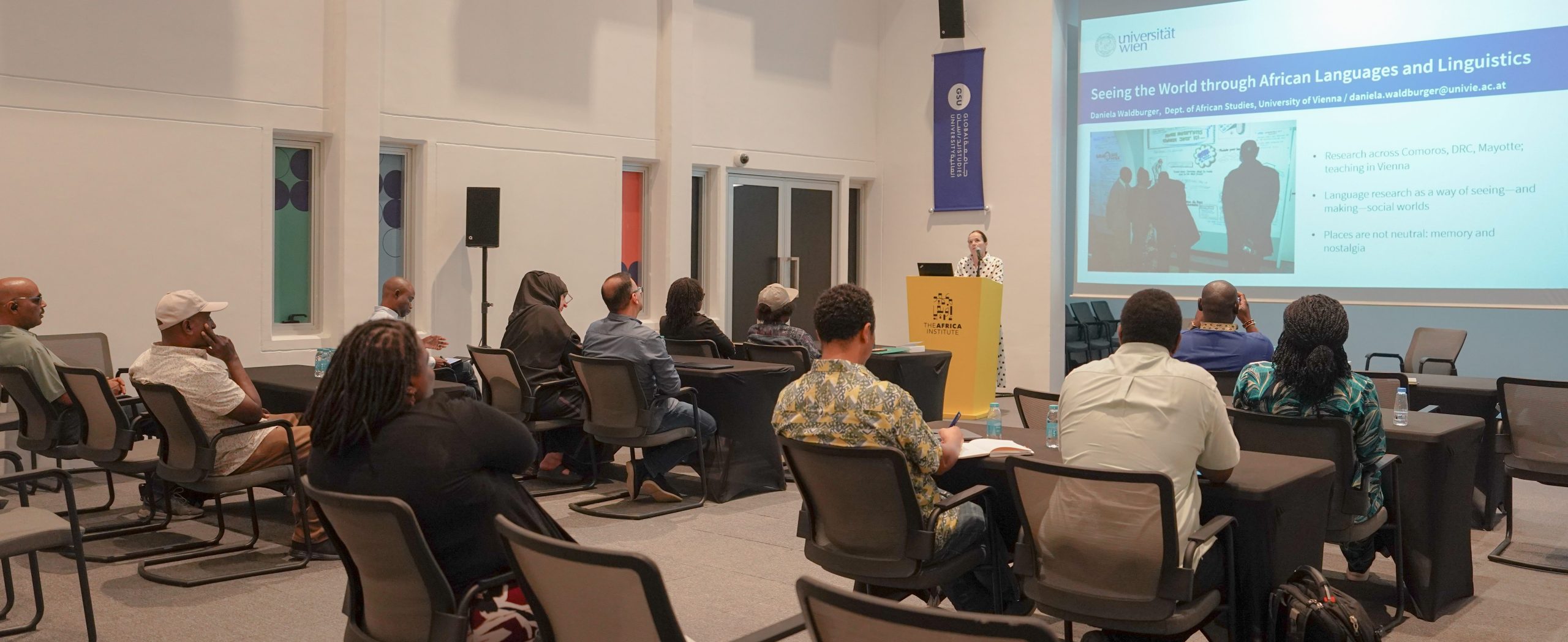
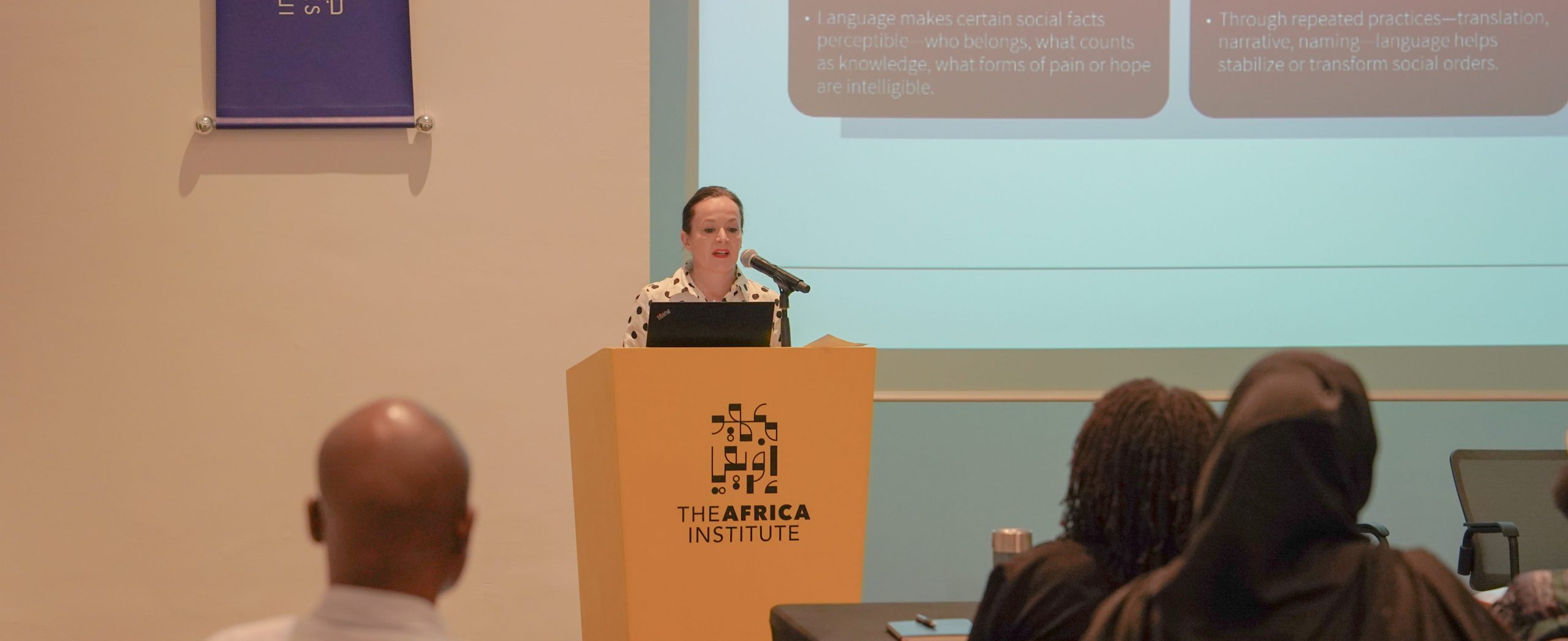
Daniela Waldburger, Senior Lecturer of Kiswahili at the University of Vienna and lecturer at the University of Graz, presented “Research in African Languages and Linguistics as Seeing the World.” She examined multilingual identities among Comorian communities in the diaspora, nostalgia among ex-mine workers in Lubumbashi (DRC), the translation of botanical knowledge into Swahili, and language, violence, and youth belonging in Mayotte. Her research highlights how African languages and linguistics offer a distinctive way of seeing and relating to the world through questions of social positioning, memory, environment, and identity.
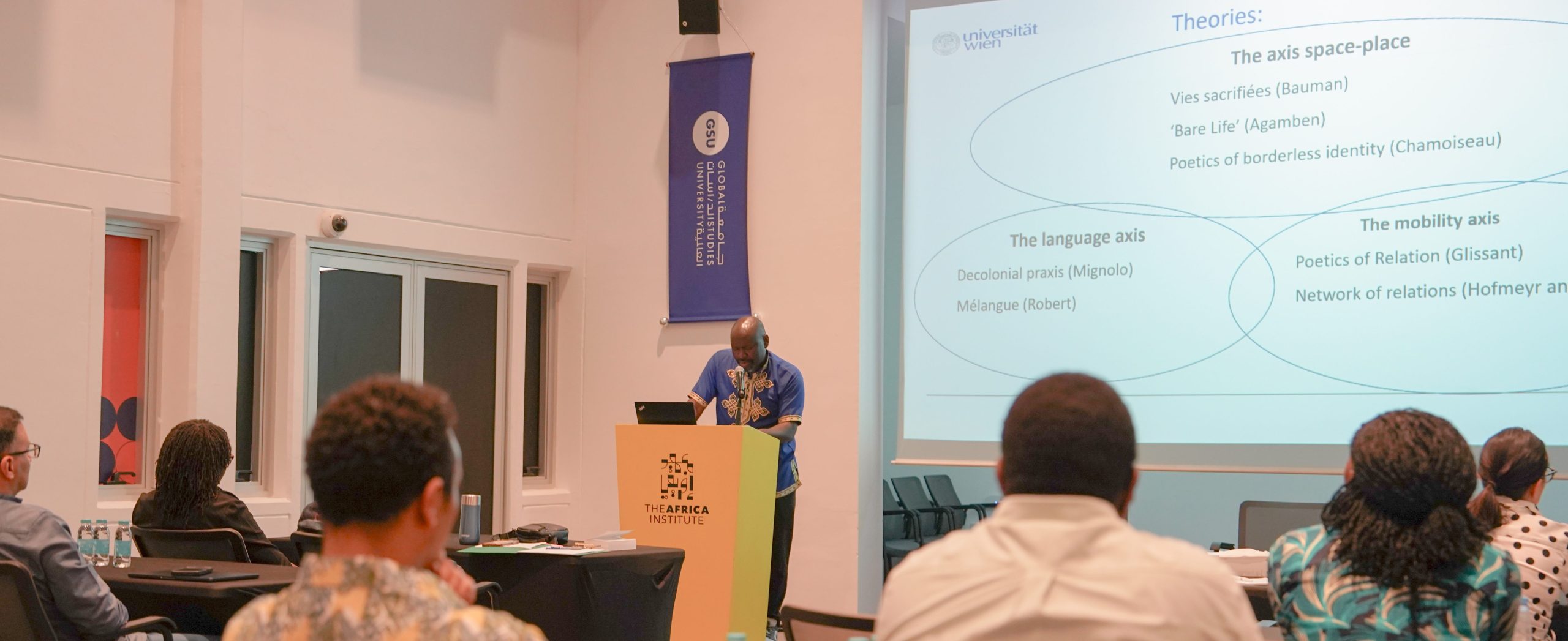
Rémi Armand Tchokothe, Associate Professor and Head of the Department of African Studies at the University of Vienna, delivered “The Forgotten Player: African Literatures in/and Global African Studies.” His presentation highlighted the importance of African comparative literatures within Global African Studies. Tchokothe argued that literature uniquely archives both the lived realities and imaginaries of African communities on the continent and in the diaspora. Drawing on his recent books, teaching, and research projects, he demonstrated how literary studies serve as a central site of knowledge production and interdisciplinary dialogue.
Faculty and Ph.D. students in Global Studies attended the seminar and engaged in discussion on new approaches to African studies and the role of language and literature in shaping understanding of society, culture, and memory.
The event reflects the university’s ongoing commitment to interdisciplinary scholarship and global research engagement.
The Africa Institute, Global Studies University, hosted a seminar in the campus auditorium on February 10, 2026, exploring how African languages and literatures serve as sites of knowledge, memory, and world-making. The session featured two visiting scholars from the University of Vienna’s Department of African Studies.
The Africa Institute, Global Studies University, hosted a seminar in the campus auditorium on February 10, 2026, exploring how African languages and literatures serve as sites of knowledge, memory, and world-making. The session featured two visiting scholars from the University of Vienna’s Department of African Studies.
Daniela Waldburger, Senior Lecturer of Kiswahili at the University of Vienna and lecturer at the University of Graz, presented “Research in African Languages and Linguistics as Seeing the World.” She examined multilingual identities among Comorian communities in the diaspora, nostalgia among ex-mine workers in Lubumbashi (DRC), the translation of botanical knowledge into Swahili, and language, violence, and youth belonging in Mayotte. Her research highlights how African languages and linguistics offer a distinctive way of seeing and relating to the world through questions of social positioning, memory, environment, and identity.
Rémi Armand Tchokothe, Associate Professor and Head of the Department of African Studies at the University of Vienna, delivered “The Forgotten Player: African Literatures in/and Global African Studies.” His presentation highlighted the importance of African comparative literatures within Global African Studies. Tchokothe argued that literature uniquely archives both the lived realities and imaginaries of African communities on the continent and in the diaspora. Drawing on his recent books, teaching, and research projects, he demonstrated how literary studies serve as a central site of knowledge production and interdisciplinary dialogue.
Faculty and Ph.D. students in Global Studies attended the seminar and engaged in discussion on new approaches to African studies and the role of language and literature in shaping understanding of society, culture, and memory.
The event reflects the university’s ongoing commitment to interdisciplinary scholarship and global research engagement.

Subscribe to our mailing list and get the latest news from The Africa Institute


