

The Africa Institute at Global Studies University, in partnership with the Open Society Foundations, announces the Spring 2026 recipients of the Restitution and Reparation: Africa and the Post-Colonial Condition Fellowship. The fellowship supports scholars and practitioners whose work addresses restitution, repatriation, and post-colonial accountability in African cultural heritage, advancing research and dialogue on historical justice.
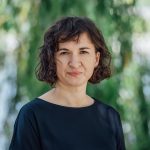
Dr. Puzon, an anthropologist based in Germany and brings extensive experience in heritage, museum, and archival research. Her work focuses on sound archives, restitution, and the legacies of colonial and scientific collections. She most recently served as a Senior Researcher on the project Towards Sonic Resocialisation at Humboldt University, exploring restitution and heritage justice. During her residency research, she is developing a monograph and a collaborative sound installation, investigating how sound collections can surface contentious heritage, fractured histories, and silenced stories. Read full profile.
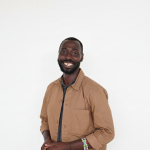
Based in Ghana, Philip Kwame Boafo is a theatre and performance studies scholar, movement maker, and performance curator. He holds a Ph.D. in Theatre and Performance Studies from the National University of Singapore and an MA in Intercultural Communication Studies from the Shanghai Theatre Academy. During his fellowship, Boafo is examining the ritual afterlives of restituted sacred objects, focusing on how their return generates new performances, obligations, and forms of recolonization within postcolonial African contexts. His project draws on performance ethnography, ritual studies, and embodied research methods to explore how knowledge, memory, and social relations are produced beyond text-based archives. Read full profile.

From Namibia, Nandiuasora “Nandi” Mazeingo is a Ph.D. candidate in Political Science at Aristotle University of Thessaloniki, Greece, and Chairperson of the Global Ovaherero Genocide Foundation. His fellowship research investigates the Ovaherero experience of the 1904–1908 genocide, analyzing the social, political, and economic dimensions of communities subjected to genocidal violence. Drawing on memory accounts and community-based perspectives, Mazeingo’s work critiques contemporary reparations negotiations with Germany, which he characterizes as insufficient, and seeks to contribute to processes of closure, healing, and recovery for the Ovaherero people. He brings extensive professional experience in governance, sustainable development, and reparative justice. Read full profile.
The fellowship provides a platform for advancing critical research and dialogue on restitution, repatriation, and cultural justice, aligning with The Africa Institute’s mission to foster rigorous scholarship and engagement in African and African diaspora studies.
Applications are currently open for the Fall 2026 fellowship, which will commence on September 1, 2026. The application deadline is April 1, 2026.
The Africa Institute at Global Studies University, in partnership with the Open Society Foundations, announces the Spring 2026 recipients of the Restitution and Reparation: Africa and the Post-Colonial Condition Fellowship. The fellowship supports scholars and practitioners whose work addresses restitution, repatriation, and post-colonial accountability in African cultural heritage, advancing research and dialogue on historical justice.
The Africa Institute at Global Studies University, in partnership with the Open Society Foundations, announces the Spring 2026 recipients of the Restitution and Reparation: Africa and the Post-Colonial Condition Fellowship. The fellowship supports scholars and practitioners whose work addresses restitution, repatriation, and post-colonial accountability in African cultural heritage, advancing research and dialogue on historical justice.
Dr. Puzon, an anthropologist based in Germany and brings extensive experience in heritage, museum, and archival research. Her work focuses on sound archives, restitution, and the legacies of colonial and scientific collections. She most recently served as a Senior Researcher on the project Towards Sonic Resocialisation at Humboldt University, exploring restitution and heritage justice. During her residency research, she is developing a monograph and a collaborative sound installation, investigating how sound collections can surface contentious heritage, fractured histories, and silenced stories. Read full profile.
Based in Ghana, Philip Kwame Boafo is a theatre and performance studies scholar, movement maker, and performance curator. He holds a Ph.D. in Theatre and Performance Studies from the National University of Singapore and an MA in Intercultural Communication Studies from the Shanghai Theatre Academy. During his fellowship, Boafo is examining the ritual afterlives of restituted sacred objects, focusing on how their return generates new performances, obligations, and forms of recolonization within postcolonial African contexts. His project draws on performance ethnography, ritual studies, and embodied research methods to explore how knowledge, memory, and social relations are produced beyond text-based archives. Read full profile.
From Namibia, Nandiuasora “Nandi” Mazeingo is a Ph.D. candidate in Political Science at Aristotle University of Thessaloniki, Greece, and Chairperson of the Global Ovaherero Genocide Foundation. His fellowship research investigates the Ovaherero experience of the 1904–1908 genocide, analyzing the social, political, and economic dimensions of communities subjected to genocidal violence. Drawing on memory accounts and community-based perspectives, Mazeingo’s work critiques contemporary reparations negotiations with Germany, which he characterizes as insufficient, and seeks to contribute to processes of closure, healing, and recovery for the Ovaherero people. He brings extensive professional experience in governance, sustainable development, and reparative justice. Read full profile.
The fellowship provides a platform for advancing critical research and dialogue on restitution, repatriation, and cultural justice, aligning with The Africa Institute’s mission to foster rigorous scholarship and engagement in African and African diaspora studies.
Applications are currently open for the Fall 2026 fellowship, which will commence on September 1, 2026. The application deadline is April 1, 2026.
Subscribe to our mailing list and get the latest news from The Africa Institute


